
Retainers hold your teeth in their new positions after braces or Invisalign, preventing them from shifting back. At San Marcos Orthodontics, board-certified orthodontists provide custom Hawley, clear, and permanent (bonded) retainers, along with a long-term retention plan that keeps your finished smile straight and stable for life.
Finishing braces or Invisalign is a milestone, but it is not the end of the story. Teeth naturally want to drift back toward where they started, and the only thing that prevents it is a well-made retainer worn as directed.
At San Marcos Orthodontics, retention is a planned part of your care, not an afterthought. Our board-certified team fits you with the right type of retainer for your smile and shows you exactly how to protect the results you worked so hard for. Whether you just completed treatment with us or need a replacement retainer from past orthodontics, we are here to help.
Why Retainers Matter
After orthodontic treatment, the bone and tissues around your teeth need time to stabilize in their new positions. During that period, and for years afterward, teeth can shift without consistent retention. Wearing your retainer as instructed helps you:
- Maintain your final orthodontic result
- Prevent relapse and unwanted tooth movement
- Protect your bite and the look of your smile
- Avoid the cost and time of future retreatment
Think of your retainer as the insurance policy on your investment in a straight smile.
Types of Retainers We Offer
Every smile is different, so we match the retainer to your needs.
Hawley Retainers
Clear Retainers
Fixed (Bonded) Retainers
A thin wire bonded behind the front teeth, most often on the lower arch. A fixed retainer works quietly around the clock with nothing to remember to put in, ideal for patients prone to shifting.
How Long Will I Wear My Retainer?
Retention is usually a two-stage routine. Right after braces or aligners, we often recommend wearing a removable retainer full time for a period, then transitioning to nighttime wear. Because teeth can shift throughout life, most patients benefit from continuing nighttime retention long term. Fixed retainers stay in place continuously. We will give you a clear, personalized schedule and adjust it as your smile settles.
When Stronger Retention Is Recommended
Some smiles need extra protection. We may recommend a more robust retention plan, sometimes combining a fixed and a removable retainer, for patients with a history of mouth breathing, teeth grinding or clenching, tongue-thrust or posture habits, or significant rotations or spacing before treatment. This is especially common after adult orthodontic treatment, where teeth have had years to settle into their old positions. Identifying these factors early is part of how we keep your result stable for the long run.
Caring for Your Retainer
A little daily care keeps your retainer fresh and effective:
- Store it in its case whenever it is not in your mouth, never wrapped in a napkin
- Keep it away from heat, which can warp it, and away from curious pets
- Clean removable retainers gently with a soft toothbrush and mild soap, not hot water
- Brush and floss carefully around a fixed retainer to keep it clean
Lost or Broken Retainer? We Can Help
Retainers happen to get lost, stepped on, or left in a restaurant napkin. If yours is damaged or missing, contact our office right away, before your teeth have a chance to shift. The sooner we replace it, the more likely your original retainer plan will still fit. We make replacements for our own patients and welcome patients from other practices who need a new retainer too.
Protect Your Smile in San Marcos
Keep the smile you earned. Call San Marcos Orthodontics at (760) 744-4444 or request an appointment to discuss retainers or replace a lost one. We are located on West San Marcos Boulevard, serving San Marcos, Escondido, Vista, Carlsbad, and Encinitas.
Frequently Asked Questions
Retainers help protect your orthodontic results after braces or Invisalign treatment. Below are answers to common questions about retainers and when fixed and removable retainers may be used together.
Are clear retainers or Hawley retainers better?
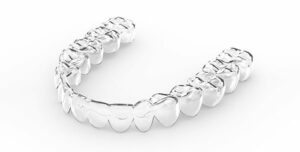
Both work well. Clear retainers are nearly invisible, while Hawley retainers are highly durable and adjustable. We will recommend the best fit based on your smile and lifestyle.
Can I get a retainer if I had braces somewhere else?
Yes. We welcome patients who completed treatment elsewhere and need a new or replacement retainer. We will take a fresh impression or scan to make sure it fits properly.
Do fixed retainers mean I never need a removable one?
Not always. Some patients wear a bonded retainer on the lower teeth and a removable retainer on top. We will design the combination that best protects your result.